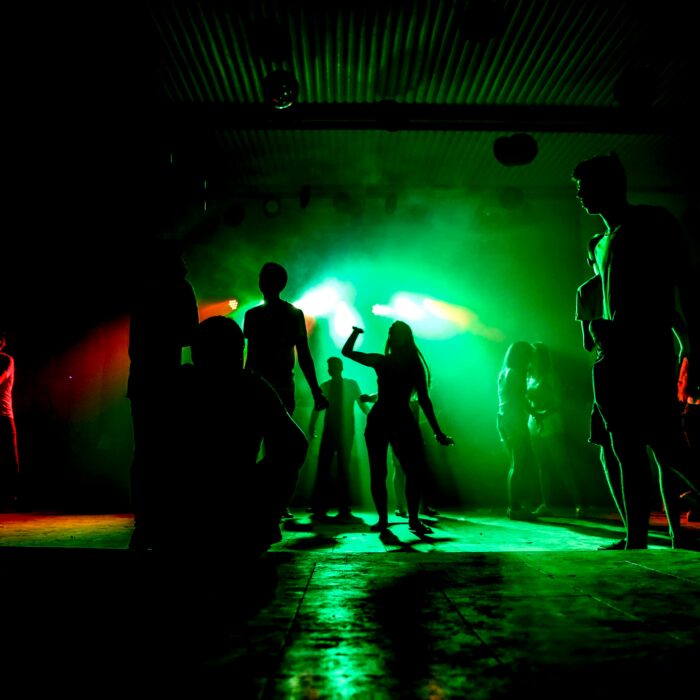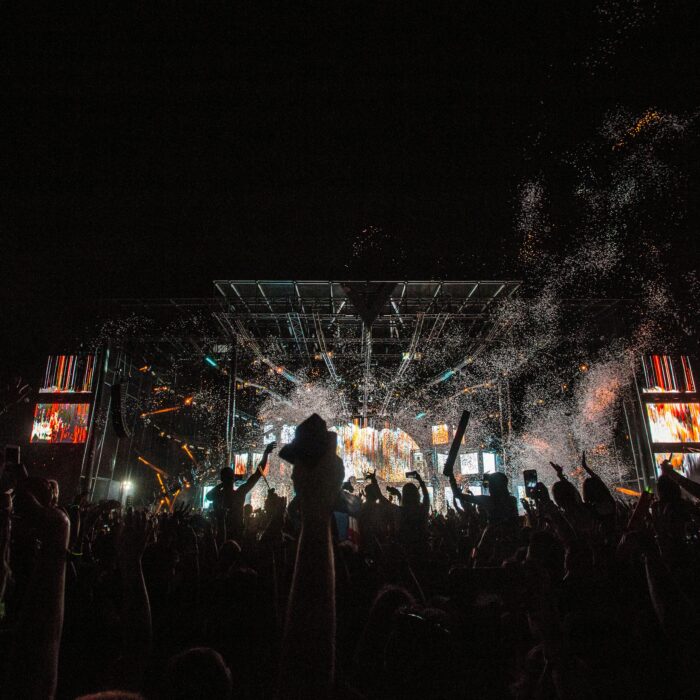
“Community” is a term that comes up constantly in discussions about electronic music, yet far fewer people seem to actively participate in one. The term is often signalled through presence, attending events, posting online, or buying tickets, but presence alone is not the same as engagement. Accessing a space does not automatically indicate investment in the music, the venue, or the people who sustain it.
Part of the confusion lies in the fact that electronic music is not a singular culture but a constellation of scenes, each with its own history, values, and codes of behaviour. Community at a dubstep night functions very differently from a queer techno party. These are active ecosystems with norms understood and reinforced by participants, and flattening them into a vague, universal notion of “the community” removes the specificity that gives each its meaning.
The language historically used to describe electronic music, terms such as “underground,” “rave,” “immersive,” and “community” itself, has been steadily co-opted by labels and brands. Today, these words often signal authenticity rather than describe it. An event can be branded “underground” while fully commercial, described as a “rave” while operating under rigid, profit-driven structures, or promoted as “immersive” while encouraging constant phone use. This raises the question of whether these experiences retain the same value if they are not being documented. Would they exist in the same way if cameras were turned off?
This is not a matter of gatekeeping or defining who belongs, yet there is a clear distinction between those fully embedded in electronic music, supporting local nights, following lineups, and understanding the lineage of sounds, and those engaging superficially. Behaviour reveals this divide. Dancers fully immersed in the music contrast with those filming entire sets, and committed participants differ from visitors chasing viral moments or micro-trends.

Venues such as The Warehouse Project illustrate this tension. Large-scale and highly visible, capable of hosting major artists, they also attract crowds whose primary relationship with the music may be fleeting. Booking both genre-focused local lineups and celebrity DJs performing to screens of phones complicates the assumption that attendance equals belonging. Presence alone no longer defines participation. True community requires more than being seen. It requires care, attention, and repeated engagement.
At the industry level, the tension deepens. Labels and brands increasingly adopt the aesthetics and terminology of underground culture to market artists only loosely connected to these spaces. Visual codes and language may be present, but embeddedness often is not. Those behind these operations rarely remain consistently present in the environments from which they derive credibility, creating a form of cultural adjacency that benefits from the perception of community without actively contributing to it.
The rise of streaming platforms has further transformed the relationship between music and its audience. Services such as Spotify have expanded access, but they have also reframed culture around data, metrics, and algorithms. This raises ongoing questions about whether streaming nurtures culture or simply extracts from it. Does it support the slow, relational work communities require, or does it prioritise acceleration and consumption? Leadership increasingly emphasises growth, market share, and monopolisation over music itself, meaning engagement risks becoming superficial and transactional.
Community in electronic music cannot be manufactured or declared. It develops over time through care, repetition, and consistent engagement. As the language surrounding these spaces becomes increasingly diluted, the distinction between participating in a culture and consuming it grows ever harder to identify. Attendance, posting, or presence are not enough. Community is earned through attention, respect, and a shared understanding of the music and the spaces it inhabits.
“Community is not a term to be declared. It is something earned. Those who truly engage understand the music, the spaces, and the people sustaining it.” Presence is not participation, and attendance does not equal belonging in electronic music.