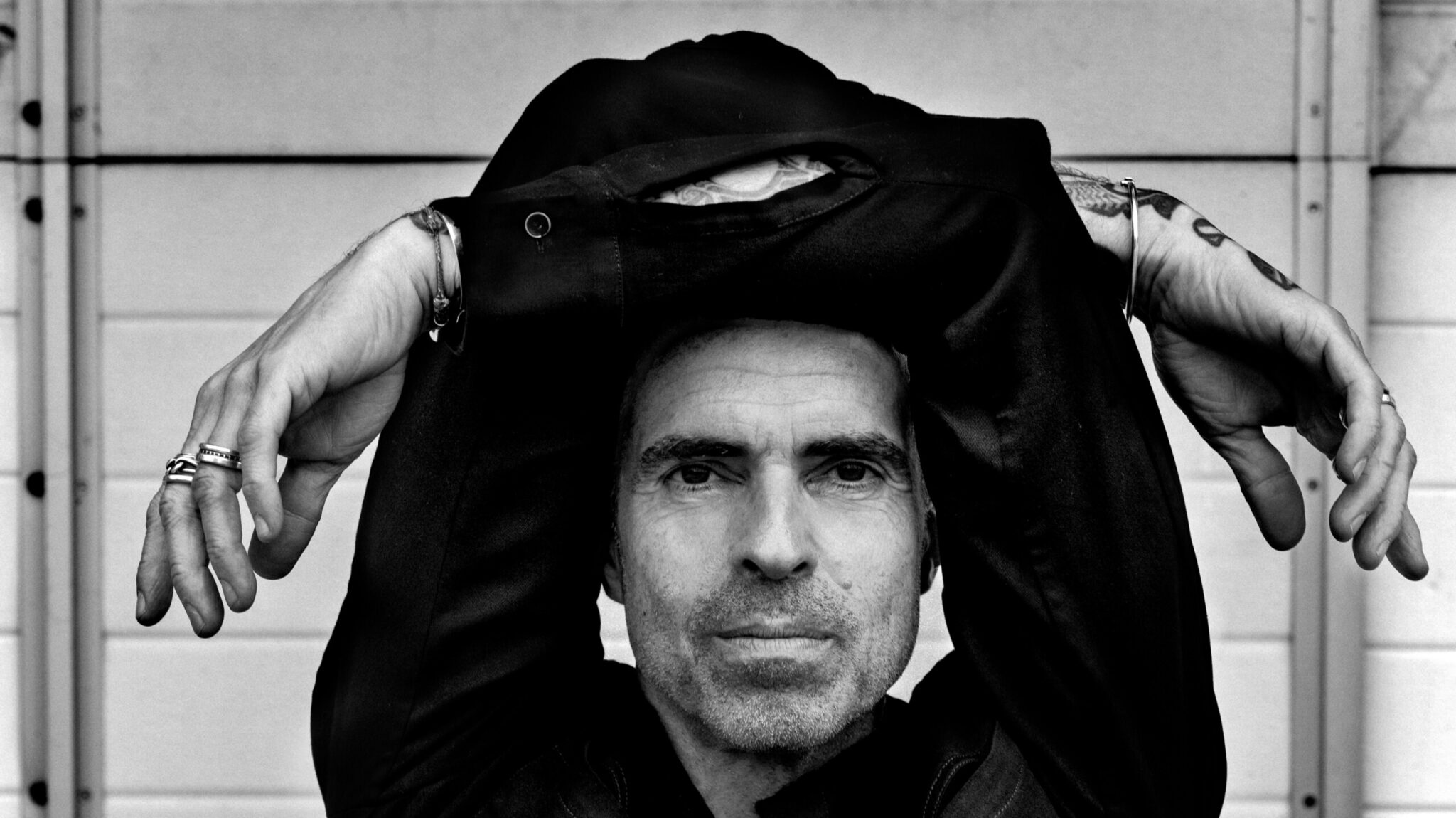
Chris Liebing joins Electric Mode’s Beyond The Beat feature to share his long-standing relationship with both skiing and Techno, reflecting on how time spent in the mountains connects with a life built around clubs, touring, and studio work.
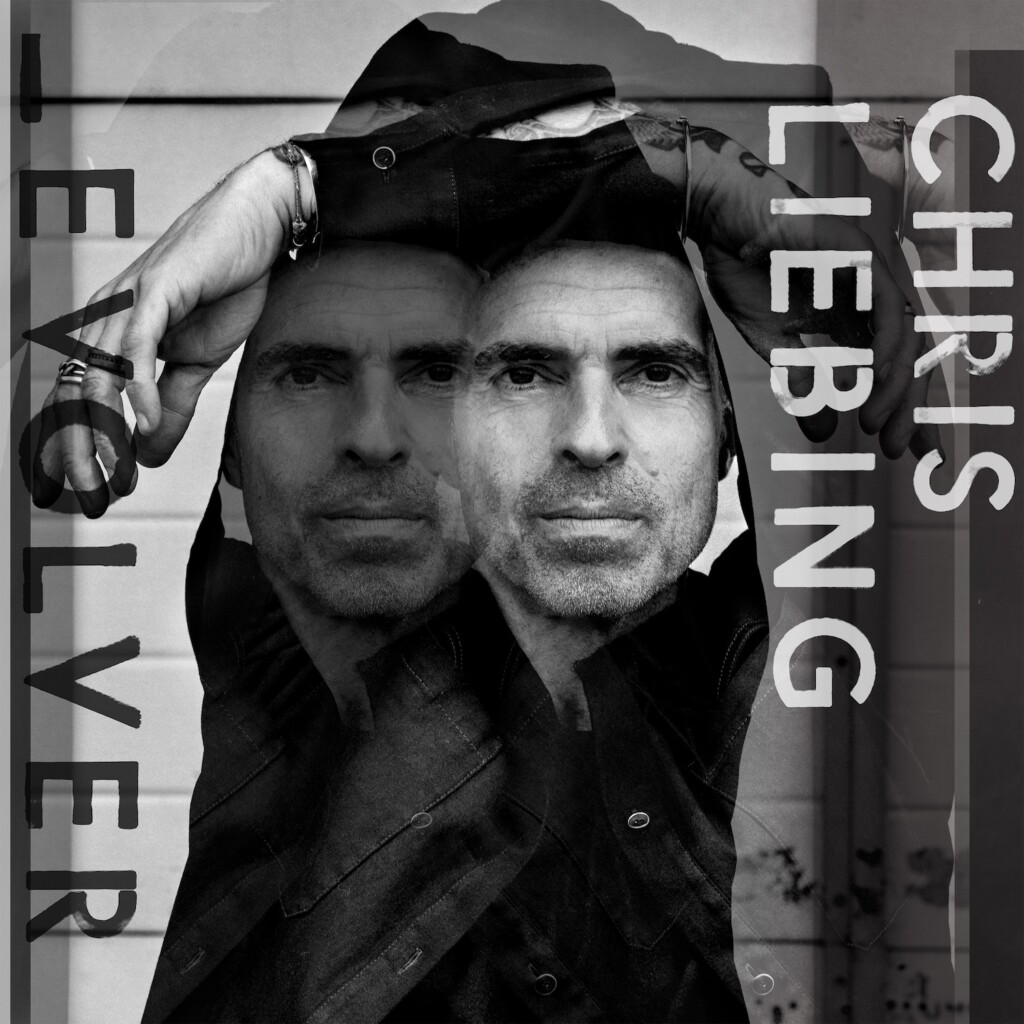
Known for his roots in Frankfurt’s Omen and Berlin’s Tresor, and as the founder of CLR, Liebing has spent more than three decades shaping a sound defined by precision, intensity, and forward movement. His first full solo album, ‘Evolver’, released on 27th March, 2026 via CLR, brings together collaborators including Luke Slater, Speedy J, The Advent, Charlotte de Witte, Terence Fixmer, Pascal Gabriel, and Daniel Miller, alongside visual contributions from Studio Bergfors and photography by Anton Corbijn. The record draws on themes of technology, artificial intelligence, and club culture, while remaining grounded in the core elements of Liebing’s sound, including industrial rhythms, acid lines, and stripped-back Techno structures. In this conversation, he reflects on skiing, his early experiences in the mountains, and how different environments inform his approach to music and performance.
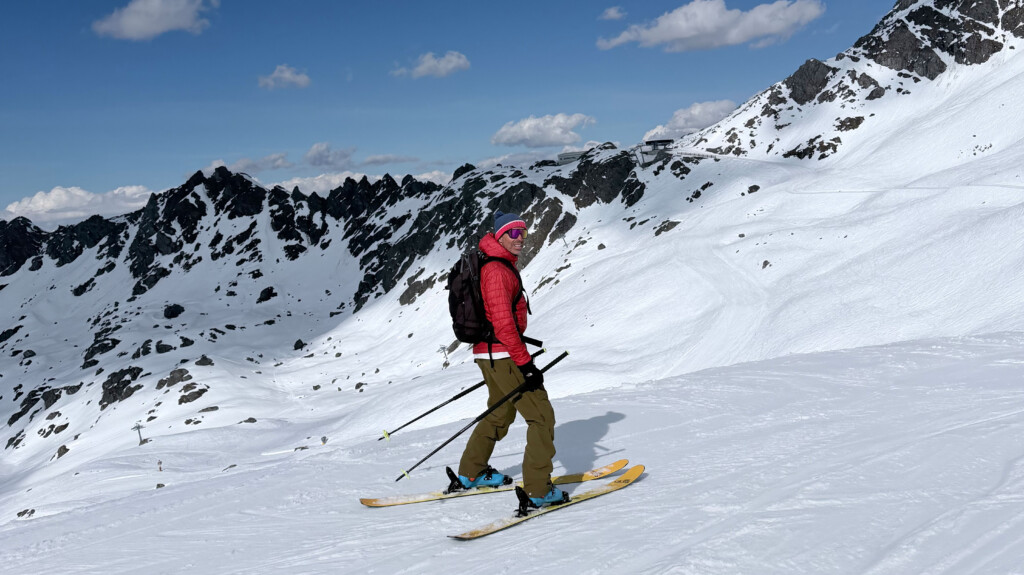
We know you as a techno don rooted in the dark, sweaty pits of Frankfurt’s Omen, but where did your relationship with the mountains begin? Was skiing a childhood tradition, or a passion you discovered later as an escape from the touring circuit?
I already started skiing when I was a little kid. I didn’t grow up in the mountains, but I often went there on school trips with ski clubs and, every winter, with my family. Then I spent one year in the U.S. and went to High School in Washington State. The ski area was very close to where I lived, so I was basically skiing every day in the winter back then. It has always been a really big part of my life. Verbier, in Switzerland, where I live now, was where I worked as a ski instructor in the early 90s, long before I became a professional DJ. I think it was kind of a logical progression that, at some point, I would just move here.
The ‘Evolver’ press release mentions your yearly trip to Oberlech, Austria. What is it about that specific location that keeps you coming back, and how does the atmosphere there differ from the high-octane energy of a club like Tresor?
The trip to Oberlech is essentially Daniel Miller’s idea. Daniel Miller, the founder of Mute Records, is a good friend of mine, and he has been going skiing in this beautiful resort in Austria since he was a little kid. There is a group of people, including Daniel and, for example, also Terence Fixmer and Miss Kittin, that meet every January for a week in Oberlech. Obviously, it’s a day-and-night difference between being in a cosy chalet up in the mountains and being in the sweaty, dark, foggy, stroboscopic basement of Tresor, but to me, experiencing both is part of the beauty of my life.
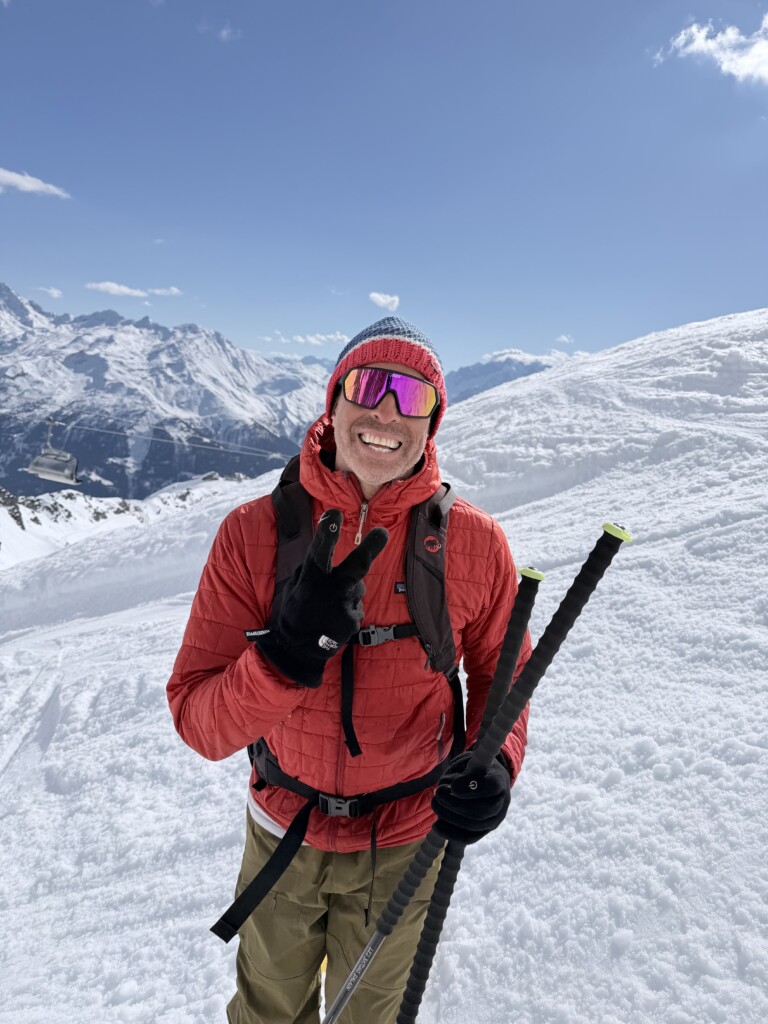
The track ‘Entangled Circuits’ was born from a jam session in Oberlech with the Alte Stuben Modular Ensemble. Do you find that the silence and crisp air of the mountains actually make you more inclined to create complex, noisier textures?
I am not really sure about that. I have to say that I would probably make similar music if I were living in Berlin or anywhere else, because that is how I feel, independent of where I am. But I would say that nature helps me a lot to stay inspired and to come up with ideas.
You are known for being a master of your machines and software. Is there a similar “gearhead” satisfaction for you in skiing? Do you find a parallel between the technical precision of a modular synth and the technical execution of a perfect carve on a steep run?
I am actually more of a free rider, but yes, technology in skiing plays a big role as well. You really have to know your equipment, and there are different types for different snow conditions. You also have to master your safety equipment, meaning your avalanche gear and all the other stuff, so there are definitely similarities. Anyway, I guess if you do something very passionately, whatever it is, you eventually have to and also want to get into the technical details of it.
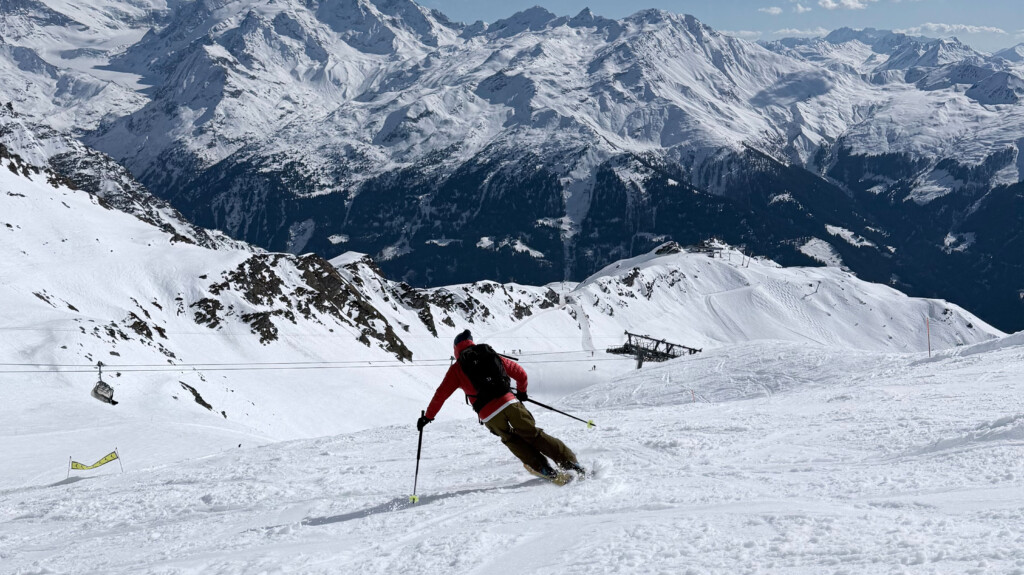
You mentioned that ‘Evolver’ was about “trusting the process” and letting go of a “grand idea.” When you’re on the slopes, do you find a similar state of flow where intuition takes over from intentional thought?
Oh yes, skiing is a lot about intuition. It is actually a very good comparison. Staying in the moment and focusing on where you are can sometimes save your life. Having the intuition to, for example, avoid a certain part of a mountain due to various dangers of exposure or avalanches can be a crucial part of the experience. This intuitive state of flow is something that I am chasing in my everyday life as well.
When you are skiing, do you prefer the beatless flow found in tracks like ‘Shaping Frequencies,’ or do you need the titanium kick drums of your more brutal techno to power you through the snow? Or is skiing a time for total silence?
You know, skiing and listening to music are kind of difficult to combine, because when you are skiing, your movements already have a certain rhythm. If you are listening to music at the same time, the rhythm of it might not be the same as the rhythm of your movements. I rarely listen to music when I am skiing, only on certain occasions, maybe on a really sunny day when I am on my own, just flowing and floating around on the slopes. But ultimately, it is very important to be completely aware of your surroundings, which includes hearing what you are doing when you are skiing. You don’t want to cut yourself off, which is also a safety measure. You’d better have all your senses functioning before you do some crazy stuff on skis. But as mentioned before, there are exceptions, those very chilled moments when you can just float around and listen to some music.
A lot of your new album deals with AI and sci-fi themes (like ‘Roy Batty’ and ‘John Connor’). When you look at the alien landscapes of a mountain peak, do you see a connection between the futuristic aesthetic of techno and the vast, untouched nature of the Alps?
Ultimately, everything is connected. Just as I said earlier, maybe even the beauty of the mountains in the Alps and the dark, foggy basement of Tresor. It’s like Ying and Yang.
Perspective Arthur C. Clarke’s quote about being a “stepping stone to higher things” appears on your album. Does reaching a mountain summit give you that same sense of perspective, feeling like a small part of a much larger, grander evolution?
I wouldn’t consider myself a proper mountain climber, but I occasionally climb a peak. Once you are on that peak and look around, you see the vast beauty of nature, and it’s actually quite humbling. And yes, it does make you feel that you are a small piece of a larger, grander evolution.
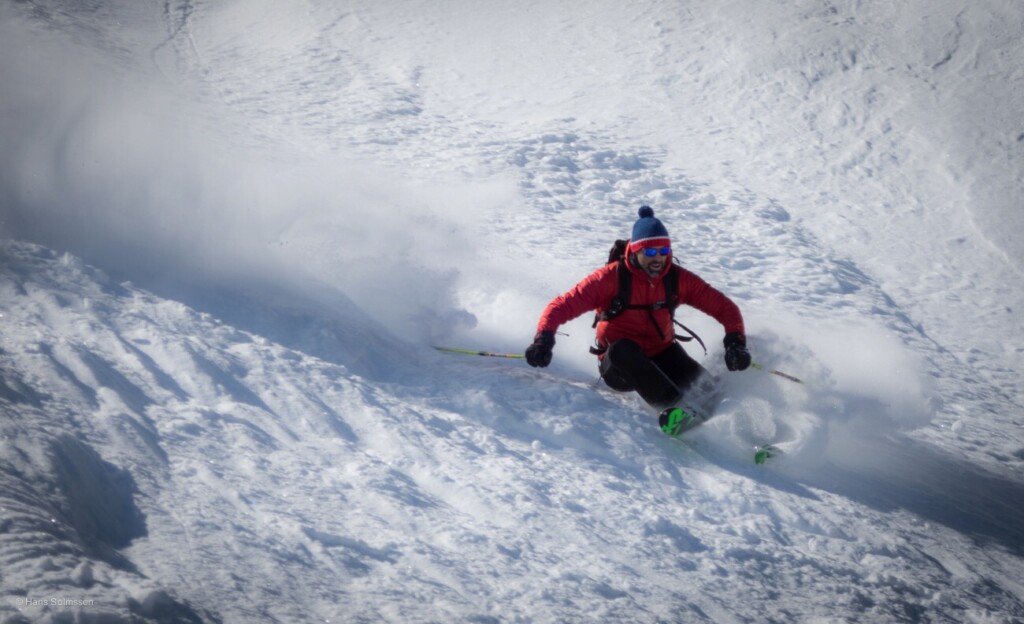
Skiing is intensely physical, much like a five-hour DJ set. Does the physical exhaustion of a day on the mountain provide a necessary reset for your mental creativity, or do the two energies feed into each other?
I would rather say that these two energies feed into each other, but of course, you have to give your body some rest. This is sometimes difficult for me to do because I might get home on a Sunday night, and the conditions on Monday are so incredible that I just have to go up the mountain to ski. So yes, I sometimes demand quite a bit of my body, but I believe the reward of getting fresh air and exercising in nature is always very positive, and in the end, it even helps me endure those five- to eight- or nine-hour sets.
If you had to choose a final goodbye moment, much like the moody atmosphere of ‘Endtrack’, would it be the final set of a world tour or the last run down the mountain as the sun sets over Oberlech?
Judging my life so far, I would try to play an amazing event up on a mountain, after that I would put on my skis, head down to the valley and then I would be done with everything.
Chris Liebing’s ‘Evolver’ is out now via CLR and available to stream and purchase here.